Women Cross DMZ has met with senior
officials from the U.S. and other countries to
advocate for diplomacy and a peace agreement
to permanently end the Korean War
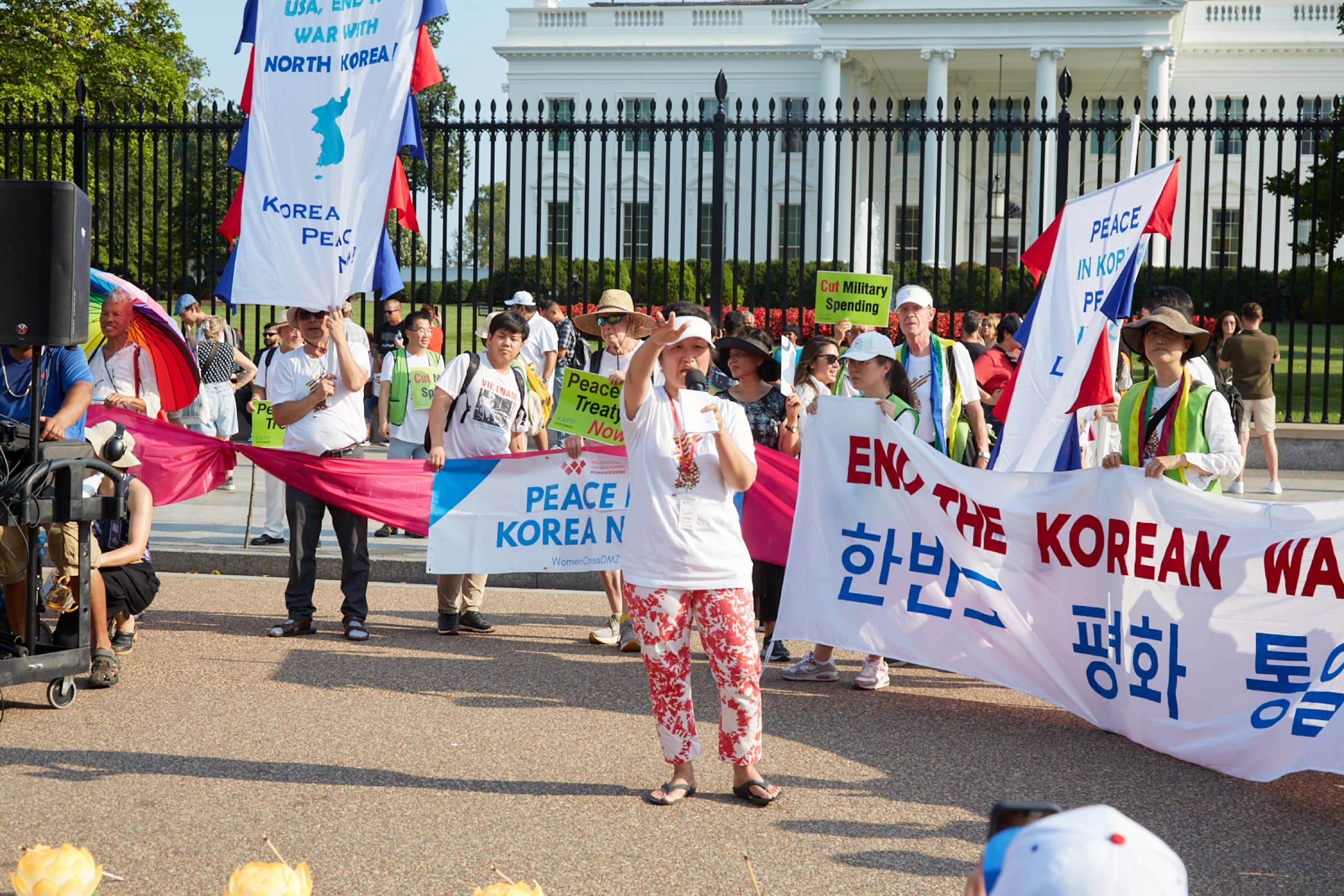
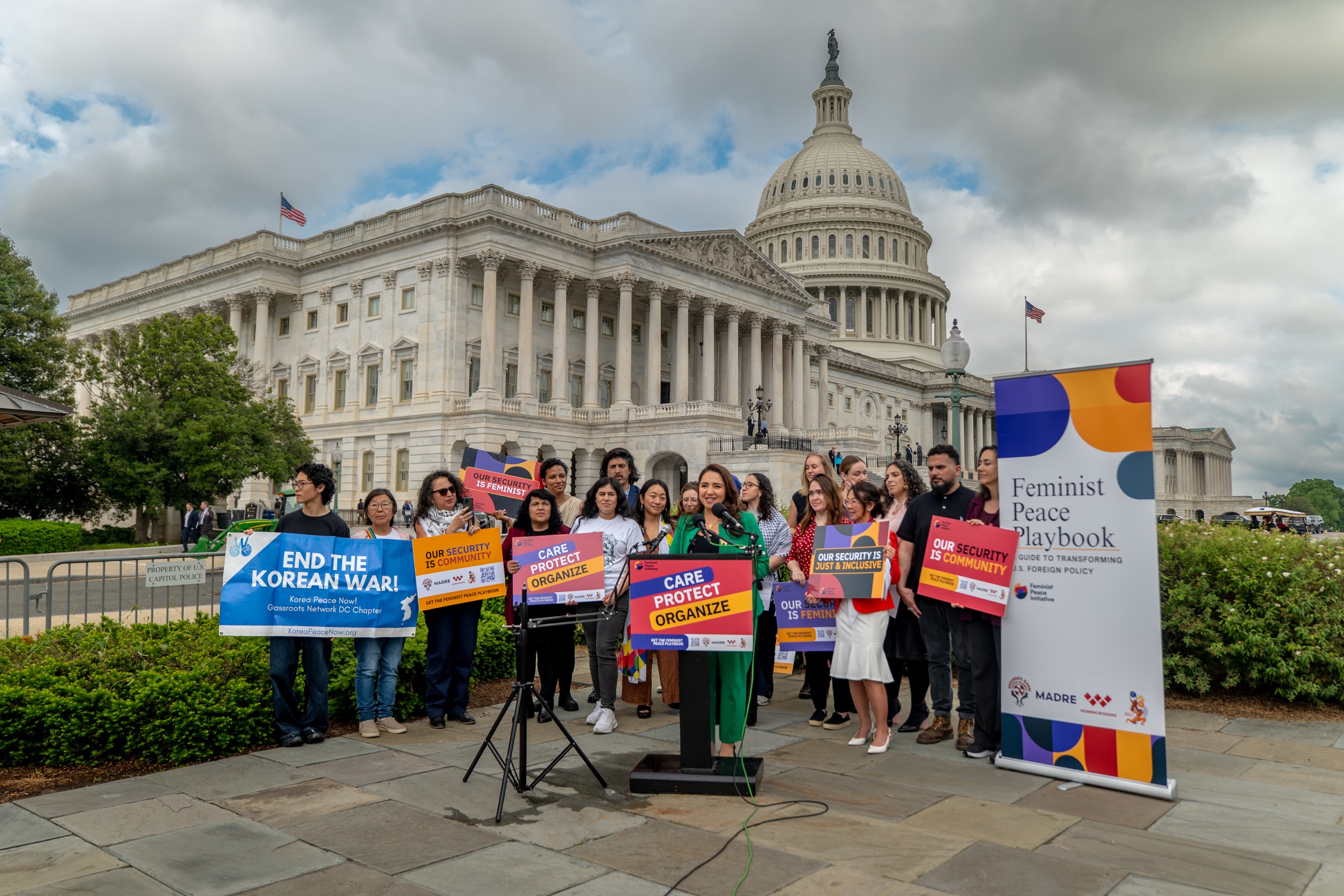
Women Cross DMZ is building the political will for a peace-first approach in the U.S. and beyond, by advocating to Congress and the State Department for a transformative, bold approach to North Korean relations. One of our vehicles for legislative change in Congress is the Peace on the Korean Peninsula Act. We have organized delegations to the White House, including Korean Americans separated from their families in North Korea, children of U.S. soldiers still searching for their fathers’ remains from the Korean War, humanitarian aid organizations working in North Korea, and U.S. veterans for peace. We also maintain lines of communication with the South Korean and North Korean governments as we urge all parties to include women peacemakers to ensure the success of the peace process towards the signing of a durable peace agreement.
“Real, successful diplomacy requires step-by-step reciprocal actions and confidence-building, not 'grand bargains' and all-or-nothing demands.”
With partners like the DC North Korea Legislative coalition and the Korea Peace Network, WCDMZ, and Korea Peace Now! Grassroots Network members have urged members of Congress to support the peace process. Working with Rep. Ro Khanna (D-Calif.), we provided substantial input on the first Congressional resolution to end the Korean War in the 116th Congress, which 52 members of Congress co-sponsored. That was followed by the success of H.R.3446, the Peace on the Korean Peninsula Act, introduced by Rep. Brad Sherman (D-Calif.) in the 117th US Congress. Nearly 50 members of Congress co-sponsored the pivotal legislation calling for an end to the Korean War, the establishment of liaison offices, and a review of travel restrictions. The bill was reintroduced in March 2023.
In collaboration with members of the global campaign Korea Peace Now!, we led a delegation of women lawmakers from South Korea to dialogue with members of Congress on how to push the Korea peace process forward and include women.
In Ottawa and Vancouver, with our Canadian sister organizations, we urged the Trudeau administration to pursue a more constructive approach that aligned with its feminist foreign policy. In Seoul, our delegation met with diplomats from the U.S., U.K., Japanese, Swedish, and Canadian embassies to discuss women’s critical role in supporting the Korea peace process.