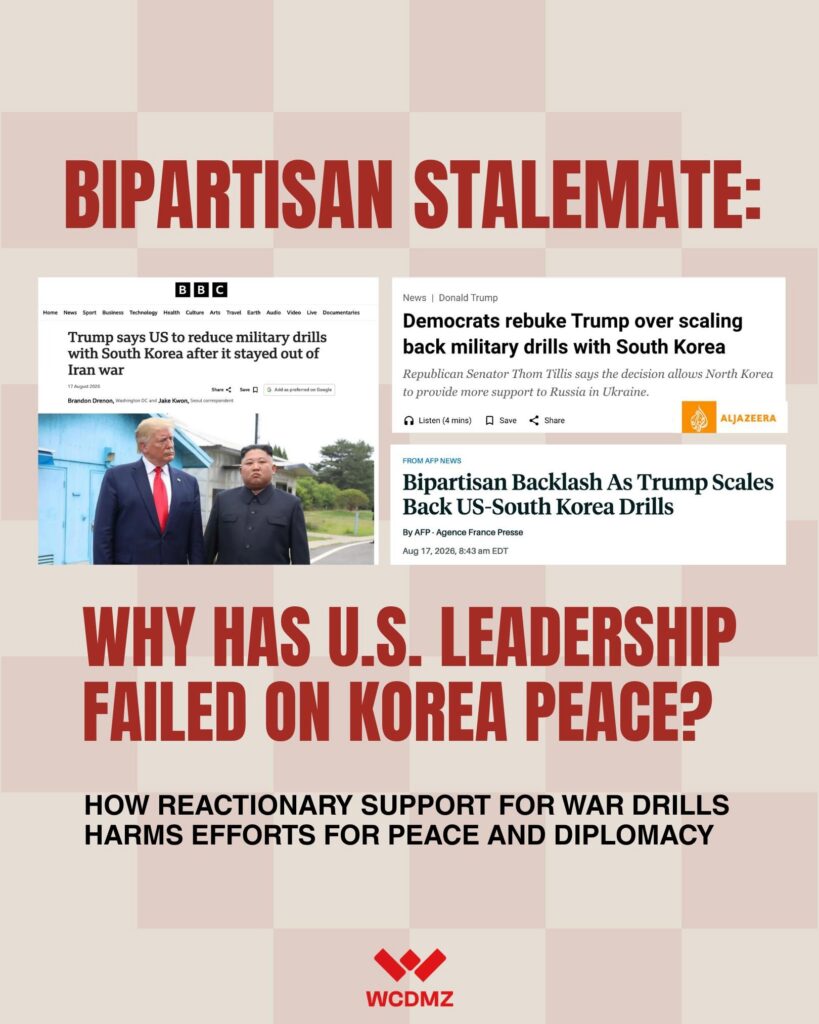
How reactionary support for war drills harms efforts for Korea peace and diplomacy
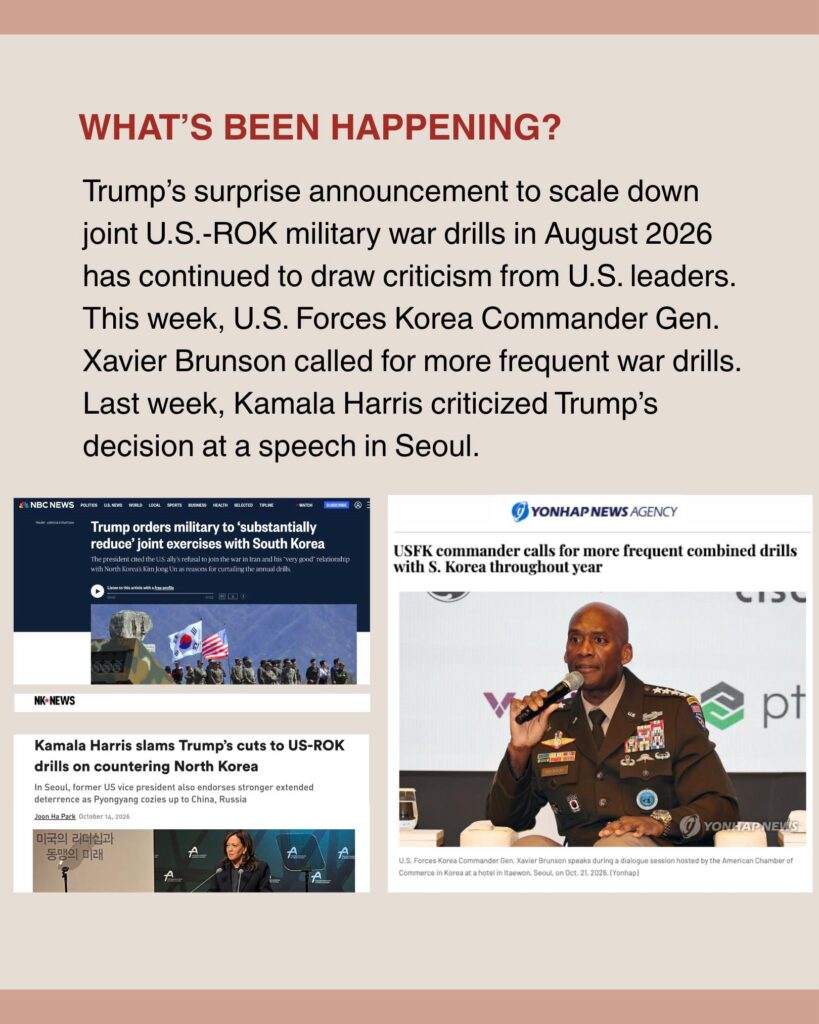
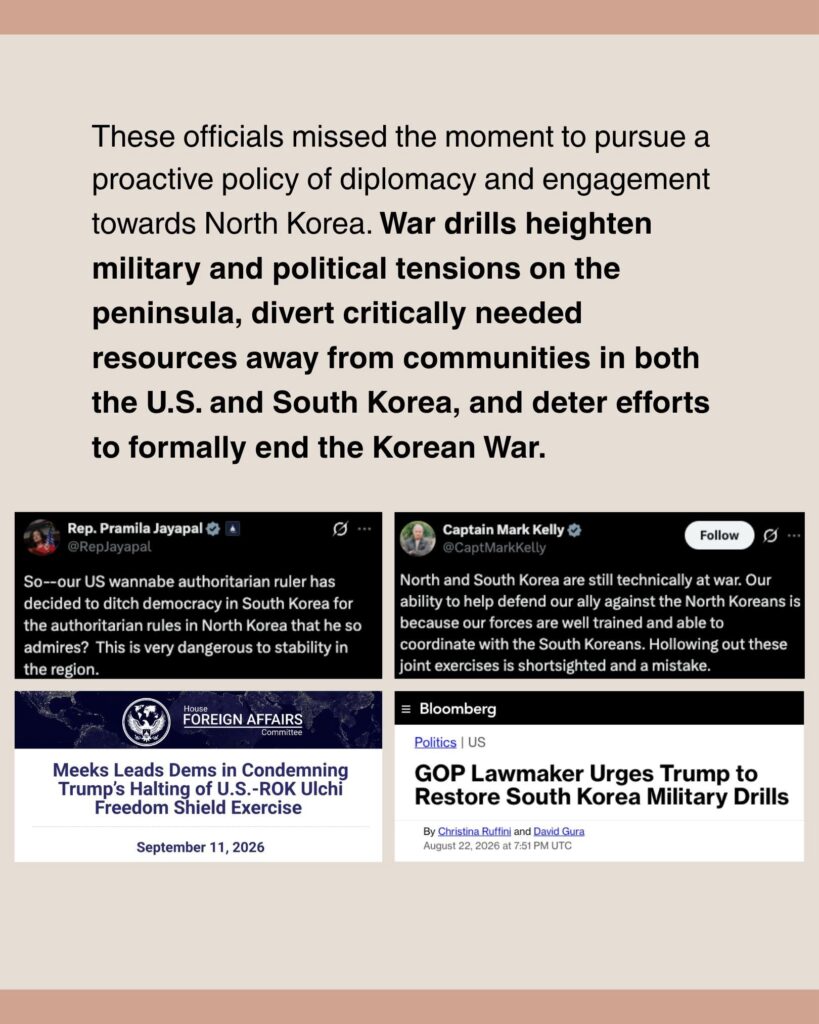
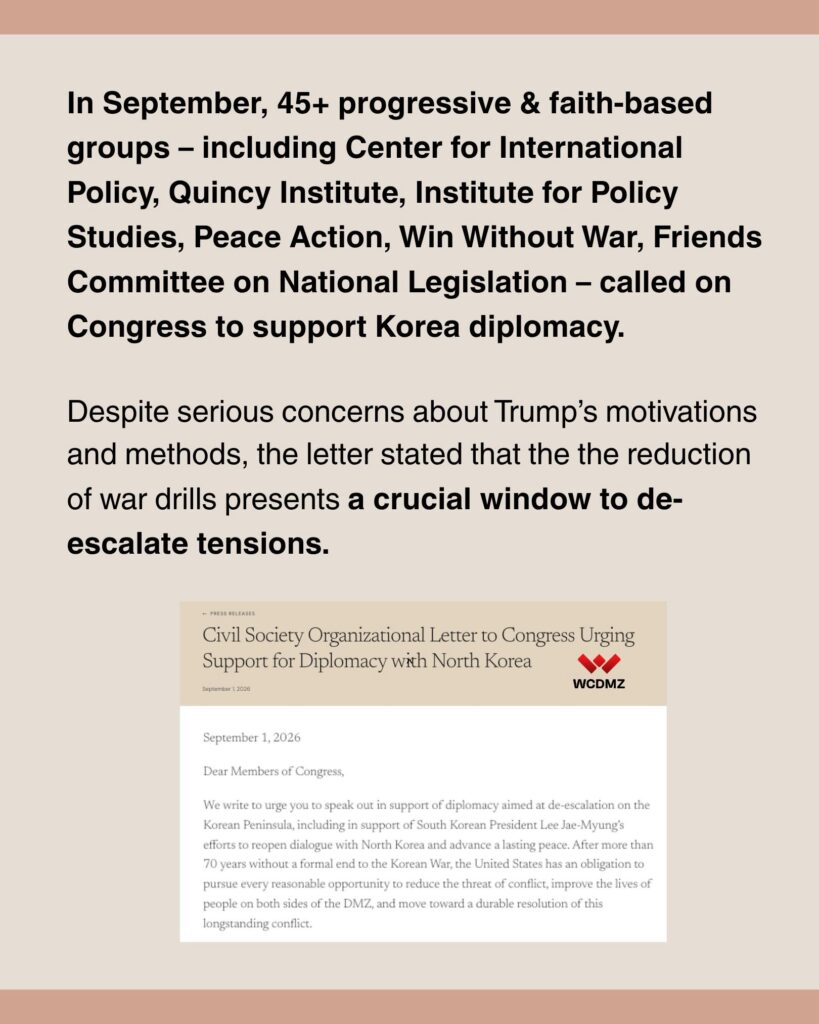
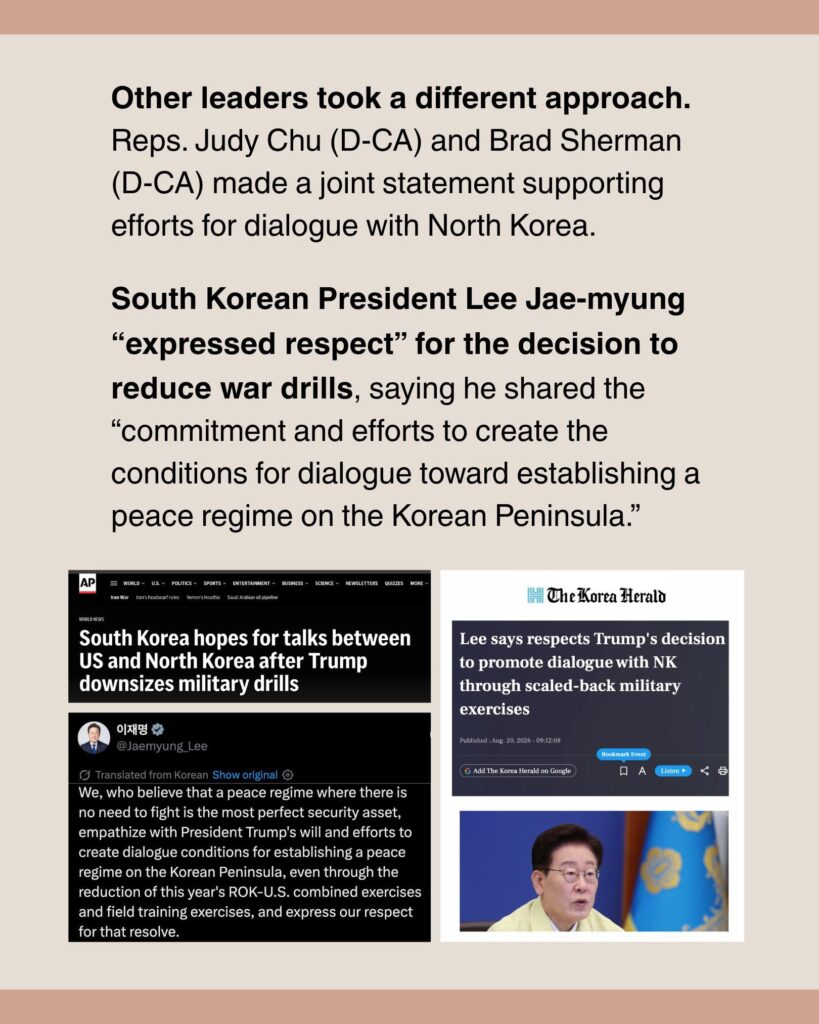
Trump’s surprise announcement to scale down joint U.S.-ROK military war drills in August 2026 has continued to draw criticism from U.S. leaders. This week, U.S. Forces Korea Commander Gen. Xavier Brunson called for more frequent war drills. Last week, Kamala Harris criticized Trump’s decision at a speech in Seoul.
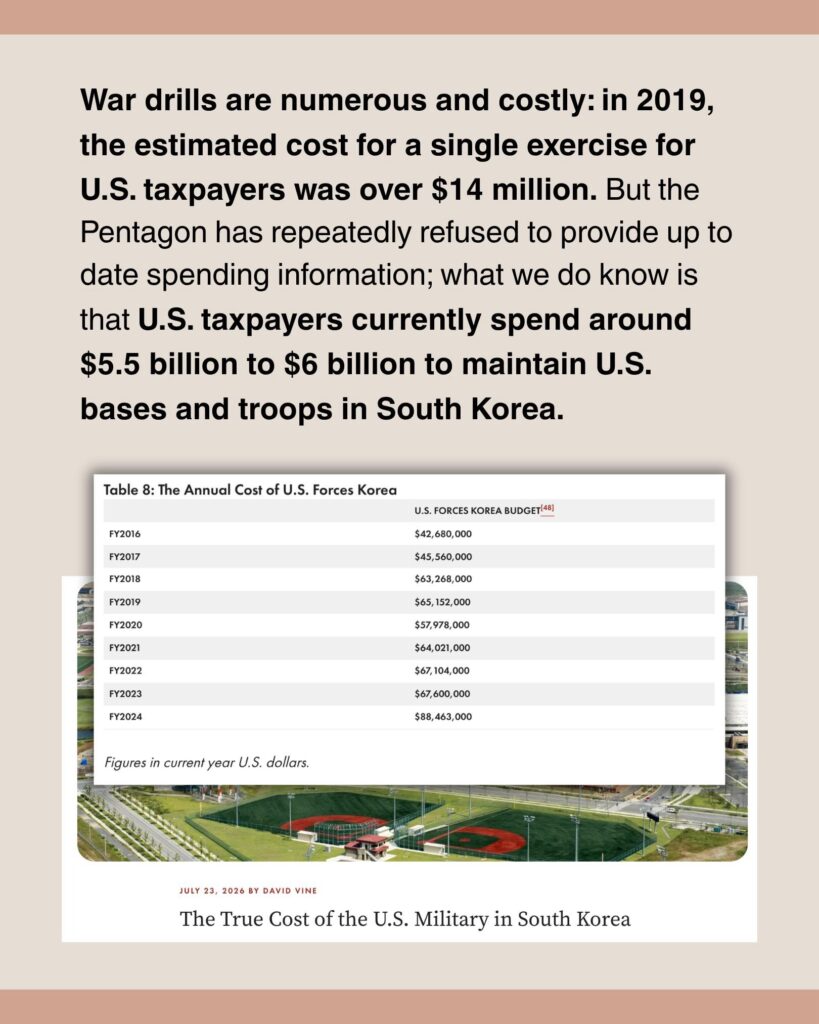
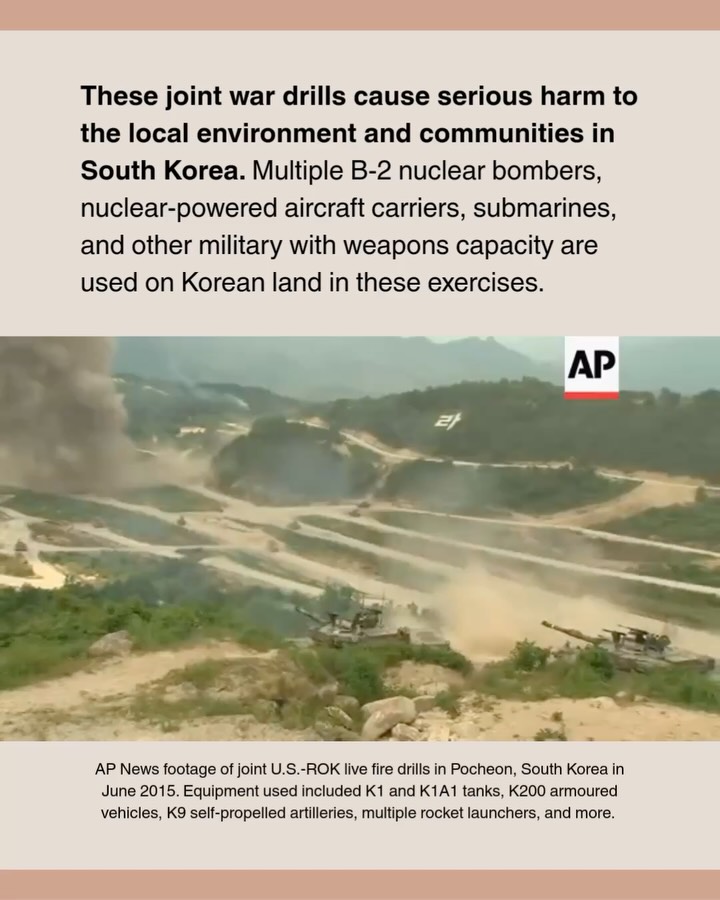
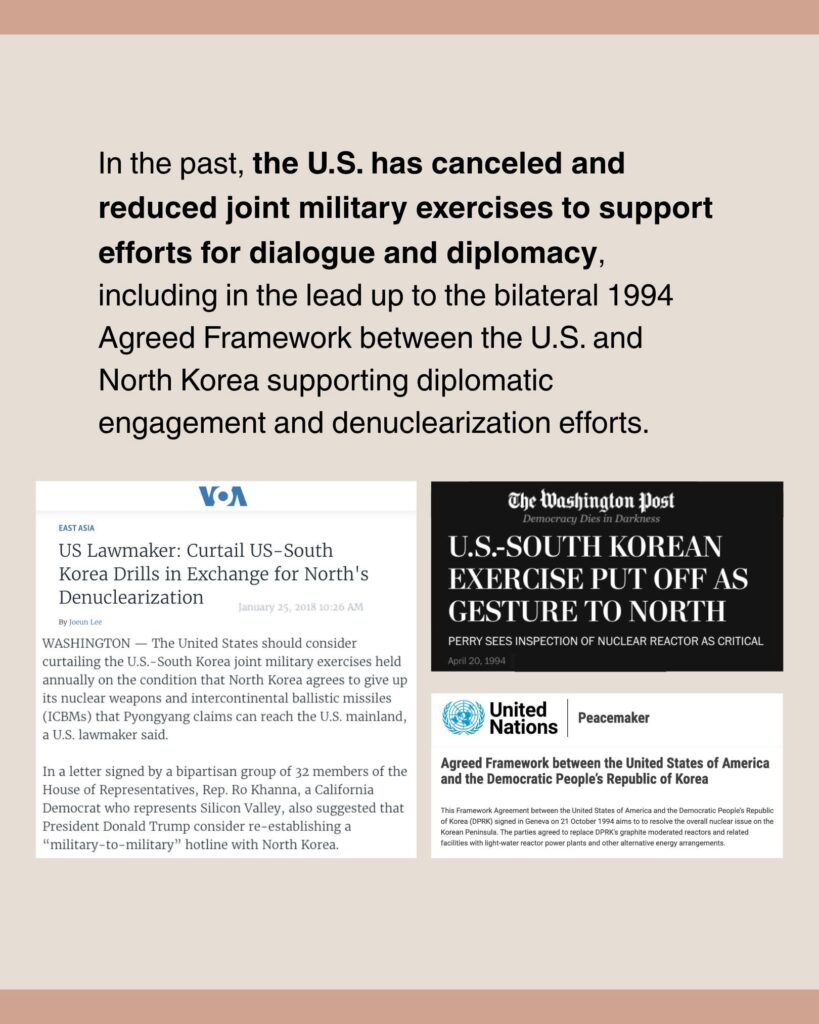
War drills heighten military and political tensions on the peninsula, divert critically-needed resources away from communities in both the U.S. and South Korea, and deter efforts to formally end the Korean War. War drills are also numerous and costly: in 2019, the estimated cost for a single exercise was over $14 million. Researcher David Vine has discovered that U.S. taxpayers spend approximately $6 billion annually on U.S. military in South Korea — over 50% more than what the Pentagon reported, with likely billions more in hidden costs.
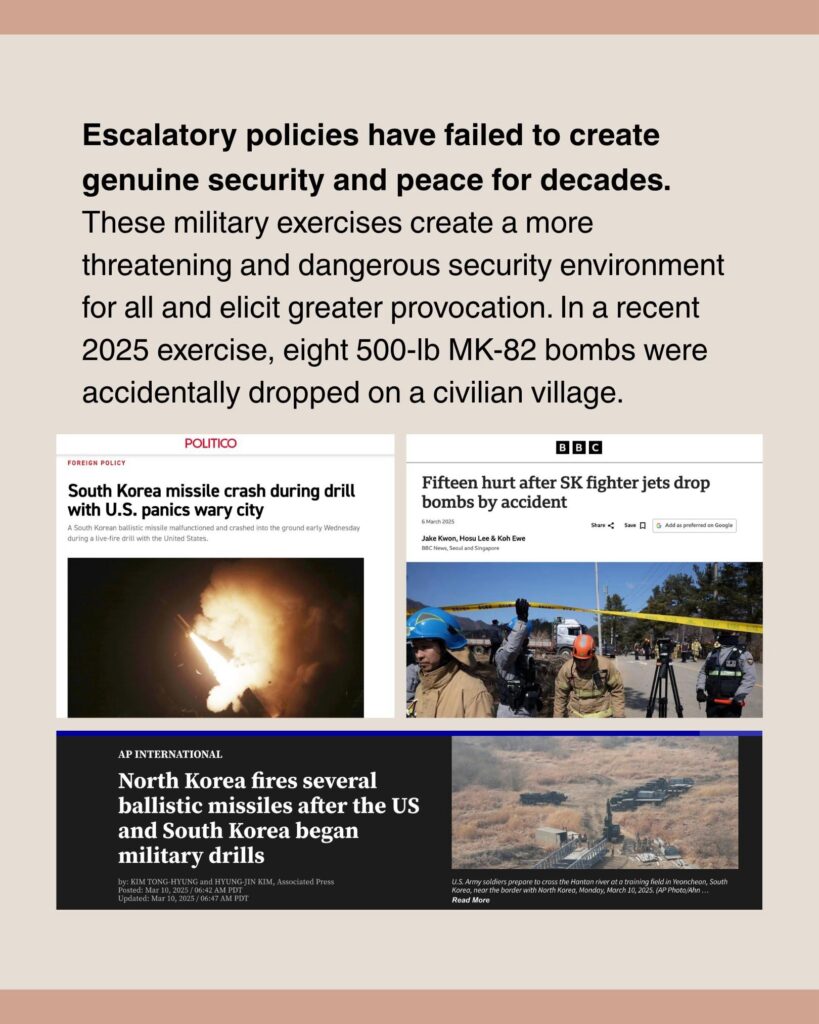
Escalatory policies have failed to create genuine security and peace for decades. These military exercises create a more threatening and dangerous environment. In a recent 2025 joint exercise, a South Korean fighter jet accidentally dropped eight 500-lb MK-82 bombs dropped on a civilian village.
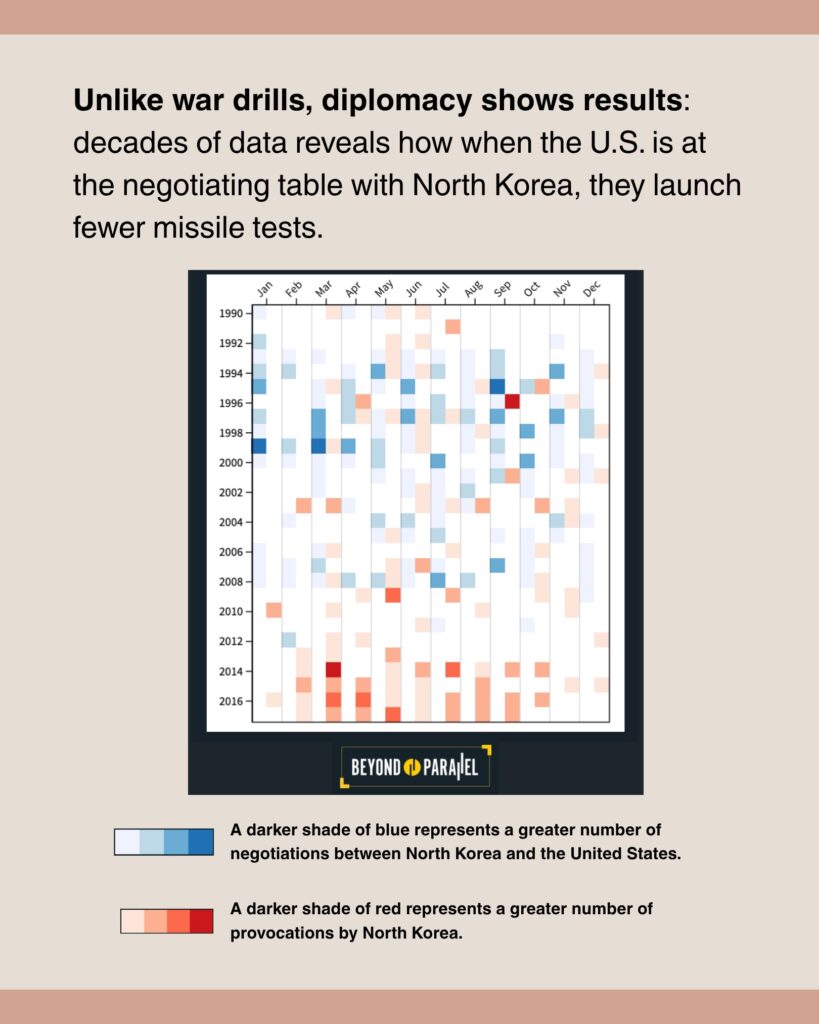
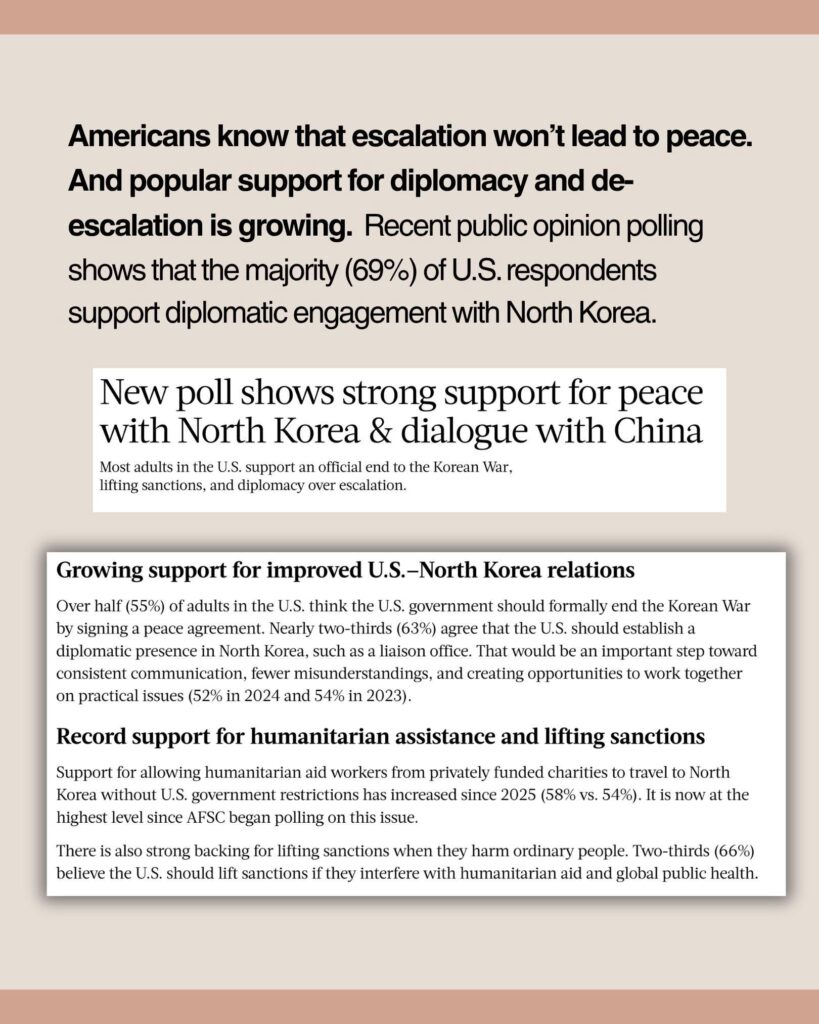
Americans know that escalation won’t lead to peace, and popular support for diplomacy and de-escalation is growing. Recent public opinion polling shows that the majority (69%) of U.S. respondents support diplomatic engagement with North Korea.
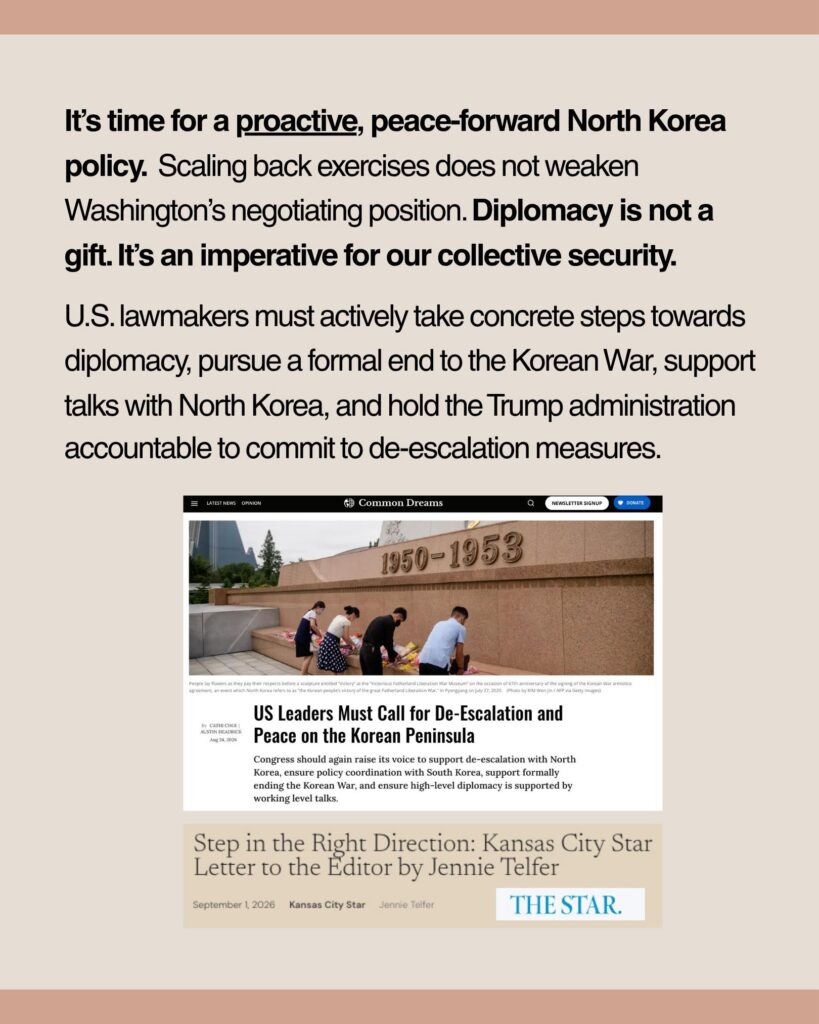
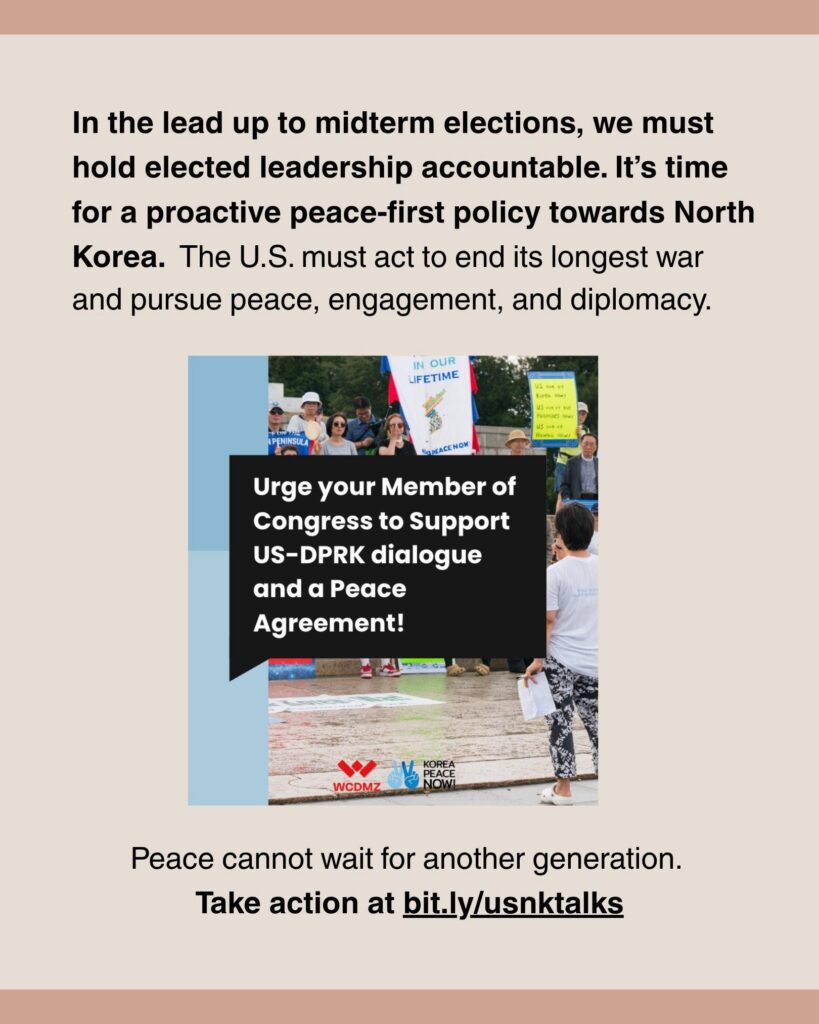
U.S. officials must listen and pursue a policy of diplomacy and engagement towards North Korea. In the lead up to midterm elections, we must hold elected leadership accountable. It’s time for a proactive peace-first policy towards North Korea.
The U.S. must act to end its longest war and pursue peace, engagement, and diplomacy. Peace cannot wait another generation; take action now at bit.ly/usnktalks 🔗