FOR IMMEDIATE RELEASE
CONTACT: Women Cross DMZ, info@womencrossdmz.org
On International Women’s Day, over 100 prominent global women leaders and organizations have sent a letter calling on the U.S. Congress to pursue accountability measures and redress for Korean women survivors of the U.S. militarized sex trade.
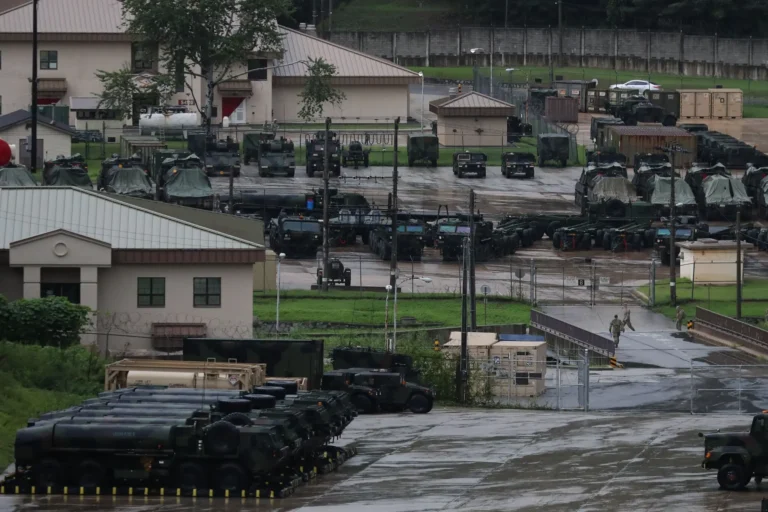
The letter, signed by leading directors of women’s rights organizations, peacebuilders, scholars and experts from across the globe, urges the U.S. Senate Committee on Armed Services, to hold the U.S. Forces Korea accountable for their role in gender-based human rights abuses inflicted at U.S. military camptowns and other areas in the Republic of Korea from the 1950s to 2010s – including trafficking, prostitution, forcible detention for purposes of administration of STI treatments.
“History has long shown that war and militarism harm women and girls disproportionately,” stated Cathi Choi, Executive Director of Women Cross DMZ. “Korean women have borne the costs of more than seven decades of the ongoing Korean War. As women in the U.S. and across the globe, we are proud to stand with the courageous survivors and advocates to call on our government to pursue measures for accountability, redress, and justice.”
“War and militarism are bad enough without human rights abuses, gender-based violence, and sex trafficking committed and facilitated by one’s own allies,” stated Ji-Yeon Yuh, Associate Professor, Northwestern University. “As women in the United States, we stand in solidarity with the survivors of these horrors, and we call on our government to be a true ally to South Korea by pursuing redress for any and all harms inflicted by the USFK on women in South Korea.”
“As a retired United States Army colonel and U.S. State Department official, I have seen firsthand the human rights abuses that result from U.S. militarism and military bases abroad,” stated Ann Wright, Veterans for Peace. “We show our solidarity with the Korean women survivors, whose case is not only a fight for them but justice for all victims of U.S. militarism’s effects.”
The Honorable Roger F. Wicker
Chairman, U.S. Senate Committee on Armed Services
425 Russell Senate Office Building
Washington, D.C. 20510
The Honorable Jack Reed
Ranking Member, U.S. Senate Committee on Armed Services
728 Hart Senate Office Building
Washington, D.C. 20510
Re: Need for Investigation; Records Release; and Public Hearings on U.S. Military Human Rights Abuses in South Korea
March 9, 2026
Dear Chairman Wicker and Ranking Member Reed:
We, the undersigned, are global women leaders united in our solidarity and support of the Korean women survivors of U.S. militarized sex trade. On International Women’s Day, we are writing to you as peace leaders to express our vested personal interest in seeing these women obtain justice.
We urge you as Chairman and Ranking Member of the Senate Committee on Armed Services, to hold the U.S. Forces Korea (U.S.F.K) accountable for their role in gender-based human rights abuses inflicted at U.S. military camptowns and bases in the Republic of Korea (R.O.K.). In a recent lawsuit filed in 2025,1 the U.S.F.K. are identified as enablers and perpetrators of sexual violence in the R.O.K. during the 1950s–2010s.2 The U.S.F.K. is also accused of overseeing detention facilities located at U.S. military base camptowns in which the women were subjected to severely coercive measures related to actual or presumed sexually transmitted infections (STIs). This lawsuit is a follow-on to a 2022 South Korean Supreme Court ruling which found that the R.O.K. government, in the process of operating and managing military camptowns, justified and encouraged prostitution of the plaintiffs who were “comfort women” for the U.S.F.K. and illegally incarcerated them to “help South Korea maintain its military alliance with the United States and earn American dollars.”3
In September 2025, a group of survivors of camptown sexual violence in South Korea filed the first-ever lawsuit targeting the U.S. military,4 presenting deeply concerning and grave allegations about the U.S.F.K.’s role in South Korea. It contends that the U.S. military was involved in encouraging, abetting, or at least acquiescing to the visits of U.S. service members to brothels where women and girls were held against their will as “comfort women.” The context of the charges are that: the women were indoctrinated into a system of sexual slavery for U.S. service members,5 subjected to weekly STI tests, and incarcerated in STI disease control facilities run by the U.S. and R.O.K. governments6 that resembled prisons and forcibly injected with high-doses of penicillin, which was only available in the R.O.K. through U.S. imports. These allegations implicate the U.S. military and government in serious violations of human rights, international law, and enduring moral responsibilities tied to U.S. military presence abroad.
Studies have long shown that in war and militarism, women are disproportionately harmed and sustain severe human rights abuses.7 For decades in South Korea, military camptowns surrounding U.S. bases have been the site of harm and human rights abuses against Korean women. This is yet another chapter in the long history of the disproportionate impact and harm sustained by women in Korea as a result of U.S. militarism.
It is essential for the U.S.F.K. and U.S. government to show transparency and accountability, and engage with the allegations appropriately. This moment presents an opportunity for the United States to deliver justice to survivors and engage in redress and accountability.8
We are therefore urging that the Senate Armed Services Committee do the following:
We understand the sensitivity of these issues and the importance of preserving the U.S.–R.O.K alliance. However, moral clarity, transparency, and justice for survivors are essential to upholding core U.S. values and maintaining global leadership on human rights.
As advocates committed to democratic ideals and gender-based justice we welcome the opportunity to schedule a meeting with each of you to discuss this important topic.
We thank you for your consideration and look forward to your response. Please do not hesitate to contact Cathi Choi at cathi@womencrossdmz.org with any questions.
cc: All Members of the Senate Armed Services Committee
Sincerely,
Note: Organizations/Affiliations Listed Only for Identification Purposes.
Organizational Signatories
Footnotes:
Congress is beginning to draft the National Defense Authorization Act (NDAA) for Fiscal Year 2027; this is the bill that funds the Department of Defense, and by extension the U.S. military, and dictates a large chunk of U.S. defense policy.
Why does this matter for peace efforts in Korea? The NDAA outlines Congressional military spending priorities in Korea. The 2026 NDAA exacerbated conditions by:
* Blocking the U.S. from returning wartime operational control of South Korea’s military back to the South Korean government for the first time ever
* Preventing the reduction of 28,500 U.S. troops stationed in South Korea for the first time in 5 years
Members of the House Armed Services Committee (HASC) and Senate Armed Services Committee (SASC) are now fielding policy and budget requests from the public before they draft the first version of the bill. Our main goal right now is to push elected officials to adopt policy language that will not block efforts for Korea peace. Our demands include:
* An official plan for a peace process to formally end the Korean War
* Challenge the joint U.S.-South Korea war drills
* Stronger transparency around Pacific Deterrence Initiative spending
We must challenge these harmful, ineffective, and costly policies head-on. We can no longer spend endlessly to flame the fans of forever war in Korea. Urge your representatives to stop military escalation at bit.ly/actndaa.
(June 3, 2025) – As Lee Jae-myung has been newly elected as South Korea’s president, hundreds of peace advocates across the country will participate in the tenth annual Korea Peace Advocacy Week to urge their members of Congress to support a diplomatic solution to the conflict and a peace-first approach.
Running from June 9-13, 2025, Korea Peace Advocacy Week will consist of virtual and in-person lobby visits with Congressional Representatives, Senators, and staff to advocate for H.R.1841, the Peace on the Korean Peninsula Act, which calls for serious, urgent diplomacy in pursuit of a binding peace agreement to formally end the Korean War. The bill — which currently has 39 co-sponsors, including bipartisan support — also calls for a review of the U.S. travel ban on North Korea, which prevents Korean Americans from visiting their families in North Korea and can impede the work of humanitarian aid groups.
This is an especially timely moment to support peace efforts, as tensions on the Korean Peninsula continue to run dangerously high with the United States and South Korea continuing to hold larger and more frequent joint war drills, which have proven to raise tensions in the region, and North Korea conducting increased missile tests. In the aftermath of Yoon Suk Yeol’s illegal declaration of martial law, which included an alleged failed plot to provoke North Korea with drones, and his subsequent impeachment, there have been renewed calls for an end to the Korean War amidst the massive pro-democracy movement in South Korea. Moreover, a new public opinion poll shows that a majority of the U.S. supports diplomatic engagement with North Korea and China to reduce rising tensions and pursue peacebuilding efforts.
Although it is known in the U.S. as “the Forgotten War,” the Korean War never ended but was merely halted by an armistice in 1953, which was supposed to be temporary. This unresolved state of war is the root cause of ongoing tensions between the U.S. and North Korea, has driven the extreme militarization of the Korean Peninsula, and has kept Korean families separated for decades. Furthermore, the U.S. approach of pressure and isolation has failed to improve the security crisis in Korea or the situation of human rights in North Korea. A peace-first approach would be a more realistic and effective method for improving the safety and well-being of Koreans and Americans.
“The election of South Korea’s new president creates a historic opening for lasting peace on the Korean peninsula. But democracy cannot thrive under militarism and forever war. As U.S.-based peace activists, we must do our part to continue to build the political will for a peace agreement to finally end the 75-year-old Korean War.” — Cathi Choi, Executive Director, Women Cross DMZ
“Advocacy Week is an important moment for supporters of a peaceful and stable Korean Peninsula to come together and speak with one voice to Congress. As we have seen in recent public opinion polling, a significant majority of the U.S. public supports engagement between the U.S. and DPRK on many issues. Advocacy Week is an opportunity for these polling statistics to come off the page and come to life through the stories and voices of constituents from across the country. At a moment when tensions are high and trust is low, we need to let our members of Congress know that we want to see courageous legislative action towards peace and diplomatic engagement.” — Austin Headrick, American Friends Service Committee
“The United Methodist Church stands in firm commitment with the Christians of Korea, both North and South, and around the world in faithful actions to work towards peace, healing, and reconciliation on the Korean Peninsula. Especially as tensions continue to escalate, Korea Peace Advocacy Week is an opportunity for faith in action to advocate to Congress to pursue peace.” — Colleen Moore, Director of Peace With Justice at the General Board of Church and Society, the social justice agency of the United Methodist Church.
“Walking with the Korean people for over a century, Maryknoll missioners have felt first-hand the pain of war and separation on the Korean Peninsula. Demilitarization, reduction of nuclear risk, delivery of humanitarian aid, reuniting separated families – everything that constitutes just and enduring peace for all Koreans begins with negotiating a peace agreement to officially end the Korean War. The Maryknoll Office for Global Concerns is so grateful to join our partners and Korea peace champions from around the United States in advocating for Congress to pursue peace now.” — Susan Gunn, Director, Maryknoll Office for Global Concerns
“As Korean Americans, we carry the enduring legacy of a war that has divided families and nations for over seven decades. The Korean American Peace Fund proudly joins this year’s Korea Peace Advocacy Week to call for an end to the Korean War through dialogue and diplomacy. Peace is not only a moral imperative — it is a necessary step toward justice, reconciliation, and a future in which all Koreans, on both sides of the DMZ, can live without fear of war.”— Yu Soung Mun, President, Korean American Peace Fund
This will be a record tenth year of coordinated advocacy days for the cause of peace in Korea, and the fifth year of advocacy days being held virtually to accommodate interested constituents from across the country. When the initiative first started in 2015, only 12 people participated; the effort has now grown to include more than 200 people.
This year’s Korea Peace Advocacy Week is being organized by the American Friends Service Committee, Korea Peace Now! Grassroots Network, Mennonite Central Committee (MCC), Church & Society and Global Ministries of The United Methodist Church, Maryknoll Office for Global Concerns, Korean American Peace Fund, and Women Cross DMZ.
###
The American Friends Service Committee (AFSC) promotes a world free of violence, inequality, and oppression. Guided by the Quaker belief in the divine light within each person, we nurture the seeds of change and the respect for human life to fundamentally transform our societies and institutions. We work with people and partners worldwide, of all faiths and backgrounds, to meet urgent community needs, challenge injustice, and build peace.
MCC U.S. is a non-profit organization that strives to share God’s love and compassion through relief, development and peacebuilding. In addition to supporting MCC’s international work, our national and regional staff lead programs across the U.S.
General Board of Church and Society is a social justice agency of The United Methodist Church, dedicated to the work of living faith, seeking justice, and pursuing peace. Addressing more than 30 social issues on which The United Methodist Church has claimed a position, Church and Society communicates with policymakers and leaders around the world with the mission of transforming the world.
As the mission and humanitarian assistance agency of The United Methodist Church, Global Ministries leads The United Methodist Church in equipping, strengthening and transforming people and communities for God’s mission around the world. In its work of making disciples of Jesus Christ, Global Ministries envisions and facilitates mission so that churches and faith communities grow and flourish; justice, freedom, peace, health and well-being prevail across racial, cultural, national and political boundaries; and people of all faiths live in dignity and security, even when they face humanitarian disasters and their aftermath.
The Maryknoll Office for Global Concerns (MOGC) represents Maryknoll missioners, who are Catholic men and women serving in impoverished communities around the world. The MOGC provides analysis and advocacy on issues of justice, peace and the integrity of creation that affect the countries and communities where Maryknoll missioners serve.
The Korean American Peace Fund (KAPF) is a community-driven initiative dedicated to advocating for peace and reconciliation on the Korean Peninsula. Rooted in the Korean American community’s long history of activism, KAPF mobilizes resources, raises awareness, and supports legislative efforts to end the unresolved Korean War. Through grassroots organizing, public education, and strategic advocacy, the fund empowers Korean Americans and allies to take action for a lasting peace that prioritizes diplomacy and human rights. KAPF is committed to fostering a future where Korea is no longer divided by war but united in peace and justice.
Women Cross DMZ is the leading feminist voice in the movement to bring lasting peace to the Korean Peninsula.
[sp_easyaccordion id=”16703″]
FOR IMMEDIATE RELEASE
March 3, 2025
Contact:
Solby Lim, Communications Associate
solby@womencrossdmz.org
Women Cross DMZ, a leading organization in the global movement for peace on the Korean Peninsula, has released a new report, Women’s Rights Under the Division System in Korea, shedding light on the urgent and often overlooked consequences of Korea’s division on women’s lives.
The report — which is being released to coincide with International Women’s Day, the 68th session of the Commission on the Status of Women, and the 80th year of Korea’s division — exposes the profound and persistent impact of the division system, from the ongoing militarization of the peninsula to human rights violations suffered by women in both Koreas. Drawing from historical and contemporary analysis, the report highlights key issues such as the presence of U.S. military bases, the gendered consequences of landmines and unexploded ordnance, and the enduring trauma of family separation.
Among the key findings:
“This report makes clear that the division system is not just a geopolitical issue; it’s a human rights crisis with real and devastating impacts on women’s lives,” said Cathi Choi, Executive Director of Women Cross DMZ. “Any effort toward peace on the Korean Peninsula must center women’s voices and experiences.”
“South Korea’s women’s rights groups have long highlighted how Korea’s division system harms women’s rights and gender equality,” said Youngmi Cho, former Executive Director of the Korean Women’s Movement for Peace, Executive Committee Member of the Christian Conference of Asia, and contributor to the report. “Women’s Rights Under the Division System in Korea reinforces why women’s leadership is crucial to ending the Korean War.”
“Women have been at the forefront of protesting U.S. military base expansion in South Korea, showing how militarism has particular impacts on women’s human rights,” said YouKyoung Ko, Policy Director of Pyeongtaek Peace Center and a contributor to the report. “It’s time we took a more holistic view of human rights, and what is being sacrificed in the name of ‘national security.’”
“Human rights have been weaponized ever since the Cold War. Addressing the gendered impacts of Korea’s division system requires a holistic approach that centers the people, building transnational partnerships to amplify women’s demands for peace,” said Suzy Kim, a professor of Korean history at Rutgers University and contributor to the report. “Only through solidarity across borders can we end war and militarism on the Korean Peninsula.”
“Women in Korea have been living in the shadow of unresolved war for more than 70 years, bearing the burdens of militarization, division, and separation,” said Jung-ah Lee, Standing Representative of Gyeonggi Women’s Association United and a contributor to the report. “Their voices must be heard if we are to create a sustainable and lasting peace.”
The report provides a set of recommendations for governments and intergovernmental bodies to address these human rights concerns. It calls for a more comprehensive approach to human rights that prioritizes the needs and agency of the Korean people, and women in particular, including accountability for militarized sexual violence, legislation that addresses the gendered impact of landmines, the inclusion of women in peace and security initiatives, and renewed diplomatic efforts to reunite separated families.
Women Cross DMZ is urging the two Korean governments and the international community to take immediate action to address the gendered impacts of Korea’s ongoing division and to work toward sustainable peace on the peninsula.
The full report, Women’s Rights Under the Division System in Korea, is available for download here.
REPORT LAUNCH EVENTS:
Webinar
Date: Wednesday, March 5, 2025
Time: 5 pm PST / 8 pm EST / 10 am Korea (Thursday, March 6)
Location: Online (Zoom)
Registration: bit.ly/dskreport
Join Women Cross DMZ for a webinar discussing the key findings of the newly released report, “Women’s Rights Under the Division System in Korea.” The report sheds light on the often overlooked consequences of Korea’s division, exposing the militarization, human rights violations, and family separations that continue to impact women’s lives today. This webinar is a must-attend for policymakers, activists, scholars, journalists, and anyone passionate about human rights, peace, and gender justice.
Speakers:
CSW Panel [Open to the public]
Date: Wednesday, March 12, 2025
Time: 8:30-10:00am EST
Location: New York City, UN Church Center, 10th Floor (777 UN Plaza, New York NY 10017)
Registration: https://ngocsw69forum.events.whova.com/registration/
Description
This ESJF and WCDMZ session highlights the urgent need for accountability and global adoption of key Women, Peace, and Security (WPS) mechanisms, including UN Security Council Resolution 1325 and the U.S. WPS Act. Drawing on cases like “comfort women” in Asia, Sepur Zarco, and South Korean landmine survivors, panelists will discuss the role of WPS mechanisms in addressing the devastating impact of war, militarism, and post-conflict realities on women and families. WCDMZ will also share the report, Women’s Rights Under the Division System, with groundbreaking analysis and research from Korean women.
Speakers:
About Women Cross DMZ
Women Cross DMZ is a global movement of women mobilizing to end the Korean War and. Through grassroots advocacy, international solidarity, and policy engagement, the organization works to advance peace, women’s rights, and demilitarization on the Korean Peninsula.
January 30, 2025
The Honorable Donald Trump
President of the United States
The White House
1600 Pennsylvania Avenue, NW
Washington, DC 20500
Dear President Trump,
The undersigned coalition of national organizations write to urge you as you take office to pursue a diplomatic, peace-first approach with North Korea focused on improving relations, ending the Korean War, and reducing nuclear risk. As groups working together to establish a just peace on the Korean Peninsula through engagement, trustbuilding, peacebuilding, reconciliation, and dialogue, we hope you will dedicate urgent attention to this critical issue.
We encourage you to continue on the progress you made in your first administration toward improving relations with North Korea. Years of multiple administrations’ policies have not only failed to meet their stated goal of denuclearization, but have resulted in worsening tensions and an increased threat of war on the Korean Peninsula. We believe your administration has a unique opportunity to pursue a new approach that prioritizes peace in ways that would meaningfully advance US-North Korean relations and reduce nuclear risk where decades of pressure have failed.
In fact, there are growing voices in Congress that recognize the importance of a peace-based approach with North Korea. In the 118th Congress, the Peace on the Korean Peninsula Act (H.R. 1369), which calls for the State Department to outline a clear roadmap to peace, garnered a record 53 cosponsors on both sides of the aisle. We strongly urge you to focus on the hard work of sustained diplomacy with North Korea and commit to the following principles:
End the Korean War. Even though active hostilities between the United States and North Korea ended in 1953 with an Armistice Agreement, there was never a formal end to the war with a peace agreement. This continued state of war is the root cause of militarism and tensions that must be resolved if there is to be real progress with North Korea. A peace agreement that ends the wartime status quo would reduce tensions and foster more effective engagement on critical issues such as improved human rights and denuclearization. Formally ending the Korean War is the foundational trust-building mechanism in achieving a durable peace and would remove North Korea’s stated justification for nuclear weapons.
Agree to a gradual, reciprocal, verifiable process. The United States cannot realistically expect North Korea to unilaterally disarm before providing any sanctions relief, security guarantees, or other incentives. We urge you to reject calls to pursue a maximalist “all or nothing” approach and instead focus on actions that can move us towards advancing peace and denuclearization.
Normalize relations by building confidence and reducing tensions. There are many steps that the administration can take to shore up the potential for a successful diplomatic process. These steps include, but are not limited to:
We urge you to take steps now to help formally end the Korean War with a peace agreement, which would lead to greater peace and security for the Korean Peninsula and the whole region. Thank you for your consideration, and we look forward to hearing from you.
Sincerely,
Action One Korea
American Friends Service Committee
Blasian March
Catholic Workers
Coalition of Koreans in America
Church of the Brethren, Office of Peacebuilding and Policy
Dorothy Day House, Washington, DC
Good Friends USA
JTS America
Kings Bay Plowshares
Korea Peace Now Grassroots Network
Korean American National Coordinating Council Inc.
Korean American Peace Fund
Korean American Support Association for Prisoners of Conscience
Legacies of War
Maryknoll Office for Global Concerns
Massachusetts Peace Action
Mennonite Central Committee U.S.
National Association of Korean Americans
NC Alliance for Truth and Hope
Nevada Coalition of Empowered Korean Americans
Nuclear Age Peace Foundation
Peace Action
Peace Catalyst International
Peace Treaty Now
Ploughshares
Presbyterian Church (USA), Office of Public Witness
Quincy Institute
RootsAction.org
Seattle Evergreen Coalition
The New England Korea Peace Campaign
The Friends Committee on National Legislation
The United Methodist Church — General Board of Church and Society
The United Methodist Church — General Board of Global Ministries
The United Methodist Church — General Board of Higher Education and Ministry
West Virginia Campaign to Ban Landmines and Cluster Bombs
Women Cross DMZ
Washington Butterfly for Hope
Win Without War
World BEYOND War
CC: National Security Advisor Mike Waltz
Deputy National Security Advisor Alex Wong
Secretary of State Marco Rubio
Like many of you, we are grieving the results of the U.S. elections and are deeply concerned about the most vulnerable in our communities, our democracy, and the potential consequences for the Korean Peninsula. Arguably no other U.S. president has had a more wildly unpredictable and extreme relationship with North Korea than Donald Trump. In his first year in office in 2017, Trump threatened North Korea with “fire and fury like the world has never seen.” This provoked Pyongyang to test what it said was a hydrogen bomb, its sixth nuclear test, and an intercontinental ballistic missile (ICBM) theoretically capable of reaching the United States. In 2017, Trump also instituted a ban on U.S. passport holders traveling to North Korea, preventing thousands of Korean Americans from seeing their loved ones. This ban represents the harshest travel restriction the U.S. government can apply to its passport holders, and currently only applies to North Korea.
This was followed by historic summits between Moon Jae In and Kim Jong Un, as well as between Trump and Kim, who promised to end the state of war and usher in a new era of peace on the Korean Peninsula. But ultimately, Trump squandered the opportunity for peace at the 2019 Hanoi summit by insisting that North Korea hand over its nuclear weapons program without any U.S. concessions or security guarantees, badly damaging relations with North Korea. Throughout his most recent campaign, Trump failed to present any plan to engage diplomatically with North Korea but instead boasted that North Korea is “afraid” of him. Trump also said that South Korea should be a “money machine” based on the U.S. troops stationed there.
For his part, Biden further eroded U.S.-North Korea relations by increasing militarization in the region and maintaining the strategy of complete, irreversible, and verifiable denuclearization (CVID) of North Korea. He relied on a deterrence strategy that has failed to abate the increased threat of nuclear conflict. Biden has also repeatedly renewed the Trump-era travel ban on North Korea that has cut off the possibility of people-to-people engagement and family reunions. As we look towards the future, we know that there is urgent and critical work to be done as U.S.-based peace activists to forge peace in Korea. We know that no amount of militarized escalation or sanctions will resolve the security crisis and that the prerequisite for peaceful coexistence and averting nuclear war with North Korea is to end the 74-year-old Korean War with a lasting peace agreement.
A majority of people in the U.S. support diplomatically engaging with North Korea to reduce tensions and avoid military confrontation. This growing political will is reflected in our hard-won legislative victories — including 52 co-sponsors of H.R.1369, the Peace on the Korean Peninsula Act. We’re also celebrating the election of Andy Kim (D-NJ), the first Korean American Senator, a longtime Korea peace champion!
Ultimately, the work for peace is not bound to any one election cycle, but instead depends entirely on the political will that we, the people, build. We must organize our communities and build solidarity with fellow anti-war activists and movements across generations and national boundaries. Our growing Korea Peace Now! Grassroots Network is part of the resilient transnational movements for peace made up of generations past, present, and future.
We reaffirm our goals:
Join our efforts to shape a progressive U.S. foreign policy to realize a more secure and equitable world. Become a Korea Peace Now! Grassroots Network member and sign up for updates here.
[sp_easyaccordion id=”15874″]
FOR IMMEDIATE RELEASE
October 30, 2024
[Honolulu, HI] — Women Cross DMZ is deeply concerned by the recent decision by the South Korean government to prohibit Women Cross DMZ Founder and Co-Director Christine Ahn, a longtime and prominent Korean American peace activist, from entering the country. This action raises serious questions about the Yoon Suk Yeol government’s commitment to democratic values and freedom of expression, especially at a time when tensions on the Korean Peninsula are running dangerously high.
Ahn — known for her tireless efforts advocating for peace on the Korean Peninsula, including organizing a high-profile crossing of the Demilitarized Zone in 2015 with a delegation of 30 international women peacemakers — was scheduled to attend a series of meetings with South Korean peace activists aimed at fostering dialogue and understanding on the issue of peace in Korea and the role of civil society, especially women. She was also scheduled to give a keynote address at the International Youth Peace Forum in Gyeonggi Province on November 2. However, upon arrival at Daniel K. Inouye International Airport in Honolulu on October 30, Ahn was denied a boarding pass by an Asiana Airlines employee, citing South Korean immigration authorities, without explanation or justification.
“The Yoon government’s decision to deny Christine Ahn from engaging in citizen diplomacy and peacebuilding at such a dangerous time for Korea and our world signals democratic backsliding that should alarm us all,” said Gloria Steinem, feminist author and activist. “When Christine Ahn and I crossed the DMZ together in 2015, we witnessed the deep wishes of the Korean people, in both North and South, for peaceful co-existence.”
“As someone who has traveled to South Korea with Women Cross DMZ several times, I am alarmed that the R.O.K. government refused to let Christine Ahn enter South Korea,” said Ann Wright, a retired U.S. Army Colonel and U.S. Diplomat, and a Board Member of Women Cross DMZ. “Hundreds of young people from South Korea and around the world who are expecting to hear Christine’s urgent calls for diplomacy will be deeply troubled to learn that President Yoon, who talks of democracy and freedom, is silencing voices for peace.”
“Christine’s courage, tenacity, and belief that a 74-year-old conflict can actually come to an end through citizen action is the light and hope we need now more than ever,” said Leymah Gbowee, the Liberian Nobel Peace Laureate who presented Ahn with the Peace Summit Medal for Social Activism at the 18th World Summit of Nobel Peace Laureates in Pyeongchang in 2022.
“Women’s voices and perspectives are essential to ending war and promoting peace, so I am deeply disturbed that Christine Ahn has been prohibited from entering South Korea,” said Lee Jae Jung, the third-term Parliamentarian and a member of the Foreign Affairs and Unification Committee who traveled to the U.S. in 2019 to meet with U.S. Congresswomen to discuss how to end the Korean War and ensure women’s leadership in the peacebuilding process. “The U.S.-R.O.K. alliance must not just be a military alliance, but one that champions democracy, nurtures peace, and empowers women to lead the way in healing and reconciliation.”
“The International Youth Peace Forum, which is being held with the support of the Gyeonggi government, invited Women Cross DMZ’s Founder Christine Ahn to deliver the keynote speech,” said Ahn Young-wook, the Secretary General of the Gyeonggi Peace Education Center. “We do not understand why she was not allowed to participate in a conference where the youth of South Korea and the world will gather to discuss peace on the Korean Peninsula and our world.”
Ahn has a long history of advocating for formally ending the Korean War, reuniting families, and including women in the peace process. The organization she founded in 2014, Women Cross DMZ, has released reports showing how sanctions, isolation, and military threats have not advanced peace and stability but only increased the risk of renewed conflict. Ahn and WCDMZ’s message advocating for diplomacy and people-to-people engagement have earned widespread support and recognition from Nobel Peace laureates, the former UN Special Rapporteur on DPRK human rights, humanitarian workers, prominent feminist activists, and even former military leaders.
Unfortunately, it is not the first time that South Korea has barred Christine Ahn from entering the country. During the “fire and fury” era of 2017, when tensions between the United States and North Korea were particularly high, Ahn was also denied entry.
The barring of Christine Ahn now is particularly concerning, given the current geopolitical tensions and the urgent need for dialogue. With the increasing likelihood of military confrontation on the Korean Peninsula, the voices of those advocating for peace must be heard, not silenced.
Women Cross DMZ calls upon the Yoon government to uphold its democratic values by allowing Christine Ahn to freely travel to South Korea in order to participate in important discussions with fellow peace activists. We believe that true progress can only be achieved through engagement, understanding, and dialogue.
About Women Cross DMZ
Women Cross DMZ is a leading feminist voice in the movement for peace on the Korean Peninsula.
About Christine Ahn
Christine Ahn is the Founder and Co-Director of Women Cross DMZ, a global movement of women mobilizing to end the Korean War and ensure women’s leadership in peace building. In 2015, she led 30 international women peacemakers across the De-Militarized Zone (DMZ) from North Korea to South Korea. They walked with 10,000 Korean women on both sides of the DMZ and held women’s peace symposia in Pyongyang and Seoul. She was the International Coordinator of the Korea Peace Now! campaign, which Women Cross DMZ launched in 2019 with three feminist peace organizations: Women’s International League for Peace and Freedom, Nobel Women’s Initiative, and Korean Women’s Movement for Peace. She has addressed the United Nations, U.S. Congress, Canadian Parliament, and R.O.K. National Human Rights Commission. Her op-eds have appeared in The New York Times and The Washington Post, and she is a regular contributor on MSNBC, Democracy Now!, and CNN. She is the recipient of multiple awards, including the 2022 Social Activist Award from the Nobel Peace Laureates at the 18th Annual Summit in Pyeongchang, South Korea, the 2020 Rotary International Peace Award, and the 2020 US Peace Prize from the US Peace Memorial Foundation for her bold activism to end the Korean War, heal the wounds from the war, and women’s leadership in peacebuilding. Ahn has a master’s degree in International Policy from Georgetown University and a certificate in ecological horticulture from the University of California, Santa Cruz.

As the nation’s leading feminist organization working to advance peace in Korea, Women Cross DMZ is pleased to announce that effective July 1, 2024, Cathi Choi will become the Co-Director of Women Cross DMZ, along with Founder and Co-Director Christine Ahn. Together, they will oversee the organization’s core work of education, organizing, and advocacy; manage staff, consultants, and volunteers; and ensure the fiscal health and strength of the organization.
Cathi previously served as the Director of Policy and Advocacy at Women Cross DMZ, a position she has held since March 2023. In that role, Cathi spearheaded nationwide efforts to advocate for Korea peace, including organizing hundreds of grassroots members across the United States and leading coalitions with legislative advocates, policy analysts, humanitarian leaders, and legal experts to enact progressive legislation and policy change. She is a key leader of the Korea Peace Now! Grassroots Network, organizing webinars on topics such as the environmental destruction of U.S. military bases in Korea, and was instrumental in organizing “Korea Peace Action: National Mobilization to End the Korean War,” which brought together more than 500 people in Washington, DC, on the 70th anniversary of the Korean War armistice to call for peace.
Cathi has been particularly passionate about and effective in bringing in younger activists to usher in the next generation of the Korea peace movement. For the Korea Peace Action, she organized a cohort of “30 under 30” Korea peace activists from diverse backgrounds — writers, organizers, doctors, healers, activists, students, academics, artists, and others — to galvanize their communities to end the Korean War.
“We are beyond excited to have Cathi step up to be Co-Director of Women Cross DMZ,” said Aiyoung Choi, Board Chair of Women Cross DMZ. “Together, Cathi and Christine will usher in the next generation of visionary young leaders to carry forward the work for peace and healing in our ancestral homeland. Blessed with deep commitment, talent, and energy, they will co-lead to build and expand our visibility and urgent call for peace in Korea.”
“As a feminist organization dedicated to cultivating the next generation of Korea peace activists, I am thrilled to have Cathi as my co-captain,” said Christine Ahn, founder and Executive Director of Women Cross DMZ. “In the three years that we have worked closely together, Cathi has shown her deep commitment and ability to lead the organization’s next stage of growth and impact. We couldn’t be luckier to have her with us.”
“As an attorney and member of a divided family, I am moved to build a better world and lasting peace on the Korean peninsula, foster intergenerational healing, and advocate for policies for a world free from militarism for all people and our planet,” said Cathi Choi, Co-Director of Women Cross DMZ. “I am humbled by the generations of peace activism that have built Women Cross DMZ’s vision and impact, and I have also witnessed the power of the rising generation of Korea peace activists eager to continue the work. I am excited to bridge these worlds and co-lead with Christine into the next era for the organization.”
Before joining Women Cross DMZ, Cathi worked at a civil rights law firm in Los Angeles and clerked for Judge Denny Chin in the U.S. Court of Appeals for the Second Circuit and Judge Gonzalo P. Curiel for the U.S. District Court for the Southern District of California. She received a JD from Harvard Law School, completed the Dual Degree International History Program at Columbia University and the London School of Economics, and obtained her BA from Columbia University. She serves as Program Committee Co-Chair for GYOPO, a collective of diasporic Korean cultural producers and arts professionals. Her writing has been published in the Los Angeles Times, YES! Magazine, Foreign Policy In Focus, Journal of Policy History, and the Asian Pacific American Law Journal.
FOR IMMEDIATE RELEASE
April 24, 2024
Inaugural Feminist Peace Summit Calls for Reshaping United States Foreign Policy
DENVER, Colo., April 24, 2024—As President Biden faces intensifying criticism over his support for Israel’s genocide in Gaza and the threat of a wider conflict looms in the Middle East, leading feminist and demilitarization scholars, activists, and movement leaders will convene at the inaugural Feminist Peace Summit in Denver, Colorado from May 1-3 to call for a new U.S. foreign policy that centers peace, justice, and ecological sustainability, and the leadership of people of color, diasporic communities, and Indigenous Peoples.
Organized by the Feminist Peace Initiative, a collaboration between Grassroots Global Justice Alliance, MADRE, and Women Cross DMZ, in partnership with The Inclusive Global Leadership Initiative at the Sié Center for International Security and Diplomacy at the University of Denver, the three-day summit will include plenary sessions on why this moment calls for feminist peace, how feminist foreign policy can resolve global conflicts, what anti-militarist grassroots organizing looks like in communities of color, and how feminist strategies can confront authoritarianism across borders.
Feminist Peace Summit organizers see the feminist and anti-war movements as interconnected struggles, citing the fact that war disproportionately impacts people according to gender and the need to adopt feminist principles in order to reorient U.S. foreign policy away from forever wars. They argue that the voices of those most impacted by colonialism, imperialism, and militarism should be prioritized in anti-war organizing.
U.S. spending on the military has reached $825 billion, making up over half of the total U.S. discretionary spending, even as warmaking causes ecological harm and the Pentagon is a major contributor to climate change. Meanwhile, U.S. foreign policy is highly undemocratic and lacks transparency between policymakers and the American public, leaving many feeling disillusioned with the strength of their voice in political decision-making. For example, a majority (52%) of U.S. voters support halting arms shipments to Israel, which have been used to decimate Gaza’s civilian population, yet the U.S. government continues to provide political backing, U.S. weapons, and military aid to Israel using taxpayer dollars.
“The Sié Center is proud to host the Feminist Peace Summit to connect academics, activists, policymakers, and community members in order to strategize how to catalyze a shift in U.S. foreign policy away from war and towards more peace and security,” said Dr. Marie Berry, Director, Sié Center for International Security and Diplomacy.
“Wherever communities face war, violent repression, or climate catastrophe, feminist grassroots leaders are mobilizing to respond,” said Diana Duarte, Director of Policy and Strategic Engagement for MADRE. “Imagine a foreign policymaking space that embraced their expertise as essential, and that resourced their proven and locally driven solutions for peace, security, and justice. Instead, elite-driven U.S. foreign policymaking — often steeped in harmful, colonial, and militarized thinking — has worsened the catastrophes that marginalized communities face. This Summit is an opportunity for feminist peace activists, scholars, and human rights advocates to exchange insights from their work addressing the most complex, protracted crises in the world and to strategize transformative ways forward.”
“Work engaging Indigenous rights, Black liberation, and migration has a history of transcending borders,” said Kitzia Esteva-Martinez, Grassroots Feminisms and Gender Justice National Organizer at Grassroots Global Justice. “Inspired by this history, we are intentionally centering these communities in shaping our foreign policy agenda.”
“U.S. foreign policy has consistently favored military force over diplomacy and peace, which has not made us safer,” said Christine Ahn, Executive Director of Women Cross DMZ. “Now more than ever, we must transform U.S. foreign policy, which will require adopting feminist principles and centering diasporic voices whose communities have been most impacted by U.S. forever wars. Unless we change course, we will never be able to achieve true human security.”
Speakers at the Feminist Peace Summit include:
The summit will also include breakout workshops, training sessions, and art-based political education. Although in-person registration is closed (with exceptions for press), all plenaries are available virtually with registration. The full schedule and list of speakers can be found here.
###
About the Sié Center for International Security and Diplomacy
The Sié Chéou-Kang Center for International Security and Diplomacy is a globally recognized center of excellence at the Josef Korbel School of International Studies that advances knowledge and practice around global security, prosperity, and social justice through innovative research, interdisciplinary education, and thoughtful engagement with others who strive for a more just, prosperous, and peaceful world.
About the Feminist Peace Initiative
The Feminist Peace Initiative — led by Grassroots Global Justice Alliance, MADRE, and Women Cross DMZ — seeks to reorient U.S. foreign policy away from militarism and endless wars towards one that advances justice, peace and collective security.
MADRE is an international human rights organization that transcends geographies and generations to deliver sustainable gender, racial, climate, and disability justice. We partner with grassroots movements in more than 40 countries, working side-by-side with local leaders on policy solutions, grantmaking, capacity bridging, and legal advocacy to achieve our shared vision for justice.
Grassroots Global Justice (GGJ) is an alliance of over 60 U.S.-based grassroots organizing groups working for climate justice, gender justice, an end to war, and a just transition to the next economy.
Women Cross DMZ is the leading feminist voice in the movement to bring lasting peace to the Korean Peninsula.
(March 12, 2023) – As tensions run dangerously high on the Korean Peninsula, hundreds of peace advocates across the country will participate in the ninth annual Korea Peace Advocacy Week to urge their members of Congress to support a diplomatic solution to the conflict and a peace-first approach.
Running from March 18-22, 2024, Korea Peace Advocacy Week will consist of virtual lobby visits with 175 Congressional offices in 32 states to advocate for H.R.1369, the Peace on the Korean Peninsula Act, which calls for serious, urgent diplomacy in pursuit of a binding peace agreement to formally end the Korean War. The bill — which currently has 39 co-sponsors, including bipartisan support — also calls for a review of the U.S. travel ban on North Korea, which prevents Korean Americans from visiting their families in North Korea and can impede the work of humanitarian aid groups.
This is an especially timely moment to support peace efforts, as Kim Jong Un recently announced that North Korea will no longer pursue reconciliation with South Korea, the United States, South Korea, and Japan are holding larger and more frequent joint war drills, which have proven to raise tensions in the region, and some experts are warning that the situation on the Korean Peninsula is more dangerous than at any time since 1950.
Although it is known in the U.S. as “the Forgotten War,” the Korean War never ended but was merely halted by an armistice in 1953, which was supposed to be temporary. This unresolved state of war is the root cause of ongoing tensions between the U.S. and North Korea, has driven the extreme militarization of the Korean Peninsula, and has kept Korean families separated for decades. Furthermore, the U.S. approach of pressure and isolation has failed to improve the security crisis in Korea or the situation of human rights in North Korea. A peace-first approach would be a more realistic and effective method for improving the safety and well-being of Koreans and Americans.
“It’s clear that the U.S. public is tired of our government’s forever wars,” said Cathi Choi, Director of Policy and Organizing for Women Cross DMZ and co-coordinator of Korea Peace Advocacy Week. “We must redirect resources away from military spending toward investments that address the climate crisis, housing, and other urgent needs.”
“Advocacy Week is an important moment to join with other organizations and advocates from around the country to tell Congress that the people of the U.S. want a different relationship with the D.P.R.K.,” said Jennifer Deibert, D.P.R.K. Program Director for American Friends Service Committee. “In a recent public opinion poll conducted by The Harris Poll, a plurality of people in the U.S. want to end the war with a peace agreement and a strong majority want the U.S. government to engage with the D.P.R.K. on a variety of issues, including family reunions, delivery of humanitarian assistance by privately funded charities, and people-to-people exchanges. It’s time for Congress to listen to advocates and people in the U.S. and pass legislation that moves us toward peace, not war.”
”The United Methodist Church stands in firm commitment with the Christians of Korea, both North and South, and around the world in faithful actions to work towards peace, healing, and reconciliation on the Korean Peninsula,” said Colleen Moore, Director of Peace With Justice at the General Board of Church and Society, the social justice agency of the United Methodist Church. “Especially as tensions continue to escalate, Korea Peace Advocacy Week is an opportunity for faith in action to advocate to Congress to pursue peace.”
“In the Anabaptist tradition we have a commitment to pursuing peace marked by seeking to engage those our government labels as ‘enemies’ with hospitality and mercy,” said Rebecca Burkholder, MCC Director of International Program. “Engaging this divide in a time of rising hostility may be one of our most important forms of holy witness in a world of increasing polarization which is desperate for signs of hope.
This will be the ninth year of coordinated advocacy days for the cause of peace in Korea, and the fifth year of advocacy days being held online due to the pandemic. When the initiative first started in 2015, only 12 people participated; the effort has now grown to include more than 200 people.
This year’s Korea Peace Advocacy Week is being organized by American Friends Service Committee, Korea Peace Now!, Mennonite Central Committee (MCC), Church & Society and Global Ministries of The United Methodist Church, and Women Cross DMZ.
###
The American Friends Service Committee (AFSC) promotes a world free of violence, inequality, and oppression. Guided by the Quaker belief in the divine light within each person, we nurture the seeds of change and the respect for human life to fundamentally transform our societies and institutions. We work with people and partners worldwide, of all faiths and backgrounds, to meet urgent community needs, challenge injustice, and build peace.
MCC U.S. is a non-profit organization that strives to share God’s love and compassion through relief, development and peacebuilding. In addition to supporting MCC’s international work, our national and regional staff lead programs across the U.S.
General Board of Church and Society is a social justice agency of The United Methodist Church, dedicated to the work of living faith, seeking justice, and pursuing peace. Addressing more than 30 social issues on which The United Methodist Church has claimed a position, Church and Society communicates with policymakers and leaders around the world with the mission of transforming the world.
As the mission and humanitarian assistance agency of The United Methodist Church, Global Ministries leads The United Methodist Church in equipping, strengthening and transforming people and communities for God’s mission around the world. In its work of making disciples of Jesus Christ, Global Ministries envisions and facilitates mission so that churches and faith communities grow and flourish; justice, freedom, peace, health and well-being prevail across racial, cultural, national and political boundaries; and people of all faiths live in dignity and security, even when they face humanitarian disasters and their aftermath.
Women Cross DMZ is the leading feminist voice in the movement to bring lasting peace to the Korean Peninsula.